Why Workplace Design Is Now a Business-Critical Issue

February 10, 2026
Most offices were designed for efficiency and visibility — not human diversity. Today’s hybrid, neurodiverse workforce exposes those limits. Neuroinclusive workplace design improves focus, wellbeing, attendance, and performance by fixing environments, not people — starting with evidence-based design audits.

Workplace design has always reflected what organisations value — but not always what people need.
For much of the last century, offices were designed to support efficiency, control, and visibility, rather than human diversity. Today, as highlighted in the Financial Times, that legacy is colliding with the realities of hybrid work, neurodiverse teams, and rising expectations around inclusion.
To understand why so many workplaces still aren’t working, it helps to look briefly at how we got here.
A Brief History of Workplace Design — and the Gap We Never Addressed
The early 20th century: efficiency over experience
In the 1920s, workplace design was influenced by scientific management theories focused on productivity, supervision, and standardisation. Early open layouts allowed managers to oversee large numbers of workers efficiently. The goal wasn’t comfort or wellbeing — it was output.
The cubicle era: privacy, simplified
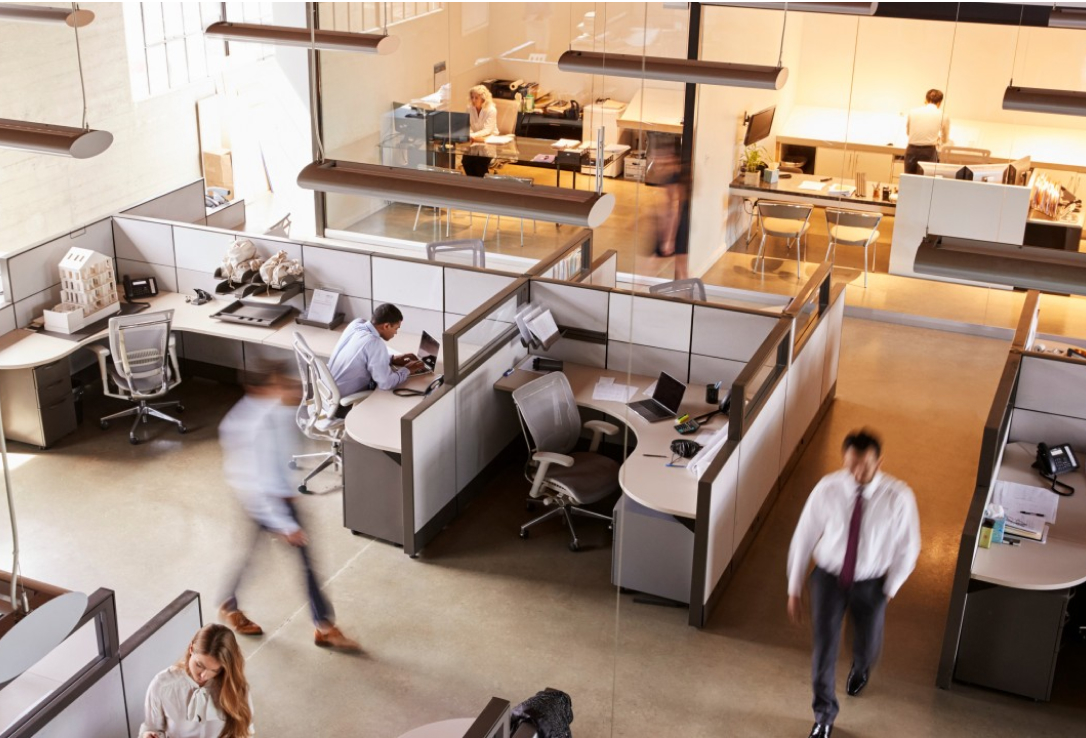
In the 1960s, the Action Office concept was introduced with good intentions: to give workers more autonomy, privacy, and flexibility. But by the 1970s and 1980s, cost pressures turned this idea into dense cubicle farms — optimised for space efficiency, not human experience.
The open-plan revival: collaboration at all costs
With advances in technology in the 1990s and 2000s — laptops, Wi-Fi, mobile working — organisations swung back to open-plan offices. The aim was collaboration, creativity, and speed. What wasn’t fully considered was the cognitive and sensory cost of constant noise, interruptions, and lack of control.
The missing middle
Across all these shifts, one thing remained consistent: Workplaces were designed around what organisations wanted people to do more of — work faster, work longer, work together — rather than what people need in order to work at their best.
That “in-between” space — choice, predictability, sensory regulation, task-appropriate environments — was largely ignored.
Why This Matters Now More Than Ever
Hybrid and flexible working have made the flaws in traditional workplace design impossible to ignore.
Some organisations, such as Cisco, were highlighted for leading the way by rethinking workplace design to support different ways of thinking, focusing, and interacting.
Many others, however, are still operating in environments built for a workforce that no longer exists.
How Poor Workplace Design Shows Up (Without Being Named)
When a workplace isn’t serving its people, it rarely gets labelled as a “design issue”. Instead, it appears as:
- Low attendance on in-office days
- Reduced productivity in the office compared to home
- Increased fatigue, stress, and burnout
- Resistance to return-to-office initiatives
- Inclusion strategies that don’t translate into lived experience
The environment becomes an invisible barrier — one that disproportionately affects neurodivergent employees, but ultimately impacts everyone.
Signs Your Workplace May Not Be Working
From our workplace audits, these are the most common indicators:
1. People avoid the office unless required
If employees say they “work better at home” but struggle to explain why, it often points to sensory overload, interruptions, or lack of control in the workplace.
2. One space is expected to do everything
Open areas used simultaneously for focus work, collaboration, calls, and social interaction create constant cognitive switching — especially challenging for neurodivergent employees.
3. Adjustments rely on disclosure
When inclusion depends on individuals asking for accommodations, the system itself hasn’t been designed inclusively.
4. Hybrid working feels fragmented
If connection, collaboration, or consistency suffer across remote and in-person work, the physical environment is often misaligned with how work actually happens.
5. Inclusion lives in policy, not practice
If values are strong on paper but not felt day to day, workplace design is frequently the missing link.
Why Neuroinclusive Workplace Design Delivers Business Results
Neuroinclusive design isn’t a niche or wellbeing add-on, it delivers tangible organisational benefits:
- Higher productivity through reduced cognitive and sensory load
- Improved attendance by making in-office days purposeful and comfortable
- Stronger culture change by making inclusion visible and tangible
- Better engagement and retention across diverse teams
Crucially, it shifts organisations away from “fixing individuals” and toward fixing systems.
Why a Workplace Design Audit Is the Starting Point
Many organisations jump straight to refurbishment or redesign. Without understanding what isn’t working, this often means recreating the same problems in a new format.
A Neuroinclusive Workplace Design Audit provides clarity by examining:
- How spaces are actually used (not how they were intended to be used)
- Sensory impact: noise, lighting, transitions, visual complexity
- Levels of choice, control, and predictability
- Alignment between roles, tasks, and environments
- Gaps between inclusion strategy and lived experience
Audits replace assumptions with evidence.
What Neuroinclusive Workplace Design Assessment Delivers
Our Neuroinclusive Workplace Design Assessment includes:
- A structured, evidence-based workplace audit
- Insight into both neurodivergent and neurotypical employee experience
- Identification of environmental barriers affecting productivity and attendance
- A clear written report
- A practical, prioritised roadmap with recommendations — from quick wins to longer-term change
This enables HR, Workplace, Estates, and Leadership teams to make confident, informed decisions.
From FT Recognition to Action
Being featured in the Financial Times reflects a growing recognition that workplace design is now a leadership issue, not just a facilities one.
Organisations that act on this insight don’t just improve inclusion — they gain a competitive advantage.
Ready to Understand What Your Workplace Is Really Communicating?
If you’re unsure whether your workplace is supporting productivity, attendance, and inclusion, that uncertainty is often the clearest signal that an audit is needed.
Contact 📩 NeuroSpecial to discuss a Neuroinclusive Workplace Design Assessment, including a full report, roadmap, and tailored recommendations.
Because inclusive teams start with inclusive environments. 💛